
Every Capital Has a Landmark. Warsaw Has a Survivor.
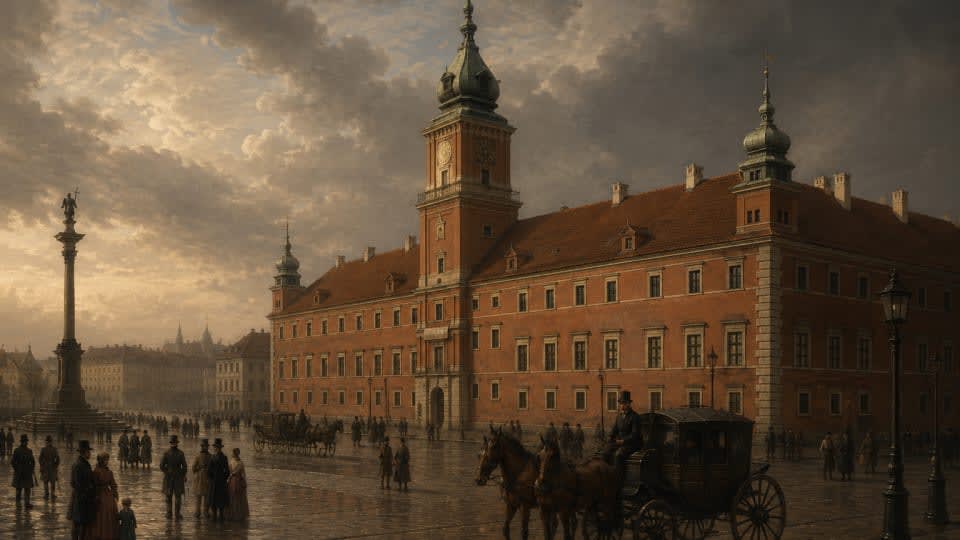
If you stand in Castle Square and watch the crowds passing beneath the towering Sigismund's Column, it is easy to admire the elegant red-brick façade of the Royal Castle in Warsaw without realizing what it truly represents. This is far more than a former royal residence. It is a place where Poland's political destiny was shaped, where kings governed the nation, where one of Europe's most groundbreaking constitutions was adopted—and where one of the country's greatest post-war reconstruction stories began.
Unlike many historic palaces that have remained untouched for centuries, the Royal Castle tells a story of destruction, determination, and rebirth. Visiting it is not simply a lesson in history—it is a journey through the resilience of an entire nation.
A Castle That Became the Heart of a Kingdom
The origins of the Royal Castle date back to the late 13th century, when the Dukes of Mazovia built the first fortified residence on this strategic site overlooking the Vistula River.
Everything changed in 1596, when King Sigismund III Vasa transferred the capital of Poland from Kraków to Warsaw. The castle suddenly became the political center of one of Europe's largest and most influential states—the Polish–Lithuanian Commonwealth.
Over the following centuries, successive monarchs transformed the medieval fortress into an impressive royal residence. Italian architects, skilled craftsmen, painters, and sculptors filled its interiors with magnificent works of art, creating a palace worthy of one of Europe's great royal courts.
The iconic Sigismund Tower, still dominating Warsaw's skyline today, became one of the city's defining landmarks.
Where Europe Changed Course
Many historic buildings witnessed important events. The Royal Castle helped create them.
On 3 May 1791, members of the Polish Parliament gathered inside the castle's Senate Chamber to adopt the Constitution of 3 May—the first modern constitution in Europe and the second written national constitution in the world after that of the United States.
The document introduced groundbreaking political reforms aimed at strengthening the Commonwealth and modernizing its government. Although Poland's independence would soon be threatened by the partitions, the constitution became a lasting symbol of democratic ideals and constitutional governance.
Today, standing in the very room where those debates took place gives visitors a rare opportunity to experience history where it actually happened.
The Castle That Disappeared
Few visitors realize that everything they see today is the result of one of the most remarkable reconstruction projects in Europe.
During the German invasion of Poland in 1939, the castle suffered severe damage from aerial bombardment. After the Warsaw Uprising in 1944, German forces deliberately demolished what remained of the building, reducing centuries of history to piles of rubble.
Yet before the destruction was complete, museum workers, historians, architects, and ordinary Warsaw residents managed to save thousands of priceless architectural fragments, paintings, sculptures, fireplaces, doors, and decorative elements. Many risked their lives to rescue these treasures, carefully hiding them for the future.
For decades after the war, the empty space where the castle once stood became one of Warsaw's most painful reminders of what had been lost.
Rebuilding a National Symbol
The decision to reconstruct the Royal Castle was far more than an architectural project—it became a national mission.
Using original blueprints, historical paintings, surviving fragments, and thousands of photographs, conservators painstakingly recreated the castle almost exactly as it had appeared before the war. Reconstruction was largely financed through public donations from people across Poland and Polish communities around the world.
When the restored castle officially reopened in the 1980s, it symbolized something much greater than the return of a historic building. It represented the determination to preserve national identity despite decades of destruction and political upheaval.
Today, many visitors are surprised to learn that the magnificent interiors surrounding them were recreated with such extraordinary accuracy.
Walking Through Royal History
Inside the castle, every room has its own personality.
The magnificent Great Assembly Hall, the richly decorated Throne Room, elegant royal apartments, ceremonial chambers, and beautifully restored galleries transport visitors into the world of the Polish monarchy. Marble fireplaces, gilded ceilings, crystal chandeliers, handcrafted parquet floors, and exquisite decorative arts demonstrate the wealth and sophistication of the royal court.
The castle also houses an outstanding art collection featuring masterpieces by Rembrandt, including Girl in a Picture Frame and Scholar at His Writing Table. Equally important are the famous cityscapes painted by Bernardo Bellotto, better known as Canaletto. His incredibly detailed paintings of eighteenth-century Warsaw later became invaluable references during the post-war reconstruction of the city.
In many ways, the paintings helped rebuild an entire capital.
The Clock That Remembers
Among the castle's countless details, one carries a particularly moving story.
The clock in Sigismund Tower stopped at 11:15 a.m. on 17 September 1939, when the castle was heavily bombed during the early weeks of World War II. Decades later, after reconstruction had been completed, conservators chose to restart the restored mechanism at exactly the same time.
It remains one of the castle's quietest yet most powerful symbols—a reminder that history can sometimes be preserved through even the smallest details.
Why Visit the Royal Castle in Warsaw?
Some royal residences impress visitors with luxury. Others with architectural beauty. The Royal Castle in Warsaw stands apart because it combines both while telling a story unlike any other in Europe.
Whether you are fascinated by royal history, constitutional heritage, world-class art, or the remarkable rebuilding of Warsaw after World War II, the castle offers an experience that extends far beyond its elegant halls. It reveals how a building can become a witness to centuries of triumph, tragedy, and renewal.
For anyone exploring Poland's capital, the Royal Castle is not simply another historic attraction—it is one of the places where the story of modern Poland truly begins.