
A Place Where You Can Travel Around the Animal Kingdom Without Leaving Warsaw
It takes less than fifteen minutes to travel from Warsaw's historic Old Town to a place where giraffes stroll across open paddocks, elephants roam beneath towering trees, penguins dive into crystal-clear pools, and lions can be heard roaring in the distance. Warsaw Zoo is much more than one of the city's most popular attractions—it is a living conservation center, a peaceful green oasis, and the setting of one of the most extraordinary true stories of World War II.
For nearly a century, visitors have come here not only to admire animals from around the world but also to experience a unique combination of wildlife, history, education, and nature. Whether you are traveling with children, exploring Warsaw for the first time, or simply looking for a relaxing day surrounded by greenery, Warsaw Zoo offers an unforgettable experience.
Nearly One Hundred Years of History
Warsaw Zoo officially opened its gates in 1928, becoming the first modern zoological garden in the Polish capital. Thanks to its carefully designed enclosures and rapidly expanding collection of animals, it quickly became one of Warsaw's favorite recreational destinations.
Its history, however, has been anything but ordinary.
During World War II, the zoo suffered devastating destruction. Many animals were killed during the bombing of Warsaw, while others were transported to German zoos. Yet behind the damaged animal enclosures unfolded one of the most remarkable humanitarian stories of the war.
The zoo's director, Jan Żabiński, and his wife Antonina secretly hid dozens of Jewish refugees inside empty cages, underground tunnels, and their own villa after they escaped from the Warsaw Ghetto. Risking their lives every day, they helped save hundreds of people from Nazi persecution.
Their extraordinary courage later inspired Diane Ackerman's bestselling book "The Zookeeper's Wife", which was adapted into the internationally acclaimed Hollywood film starring Jessica Chastain. Today, the Żabiński Villa remains one of the most meaningful historical sites within the zoo.
More Than 500 Animal Species
Today Warsaw Zoo covers approximately 40 hectares and is home to more than 500 species and several thousand individual animals from every continent.
Visitors can observe majestic African elephants, graceful giraffes, white rhinoceroses, hippopotamuses, lions, tigers, snow leopards, wolves, bears, zebras, camels, and countless smaller mammals. The zoo is equally famous for its rich collection of tropical birds, reptiles, amphibians, fish, and insects.
One of the highlights is the Herpetarium, where visitors encounter fascinating snakes, crocodiles, turtles, and exotic lizards in carefully recreated natural habitats. The modern aviaries allow colorful birds to fly freely above visitors, creating an immersive experience rarely found in traditional zoos.
Every season brings something new, making each visit slightly different from the last.
A Modern Conservation and Research Center
Today's zoos play a much greater role than simply displaying animals, and Warsaw Zoo is no exception.
The institution actively participates in numerous international conservation programs dedicated to protecting endangered species. Working together with zoological gardens across Europe and beyond, the zoo helps manage breeding programs that support the survival of rare animals whose populations continue to decline in the wild.
Education is equally important. Throughout the year, Warsaw Zoo organizes workshops, lectures, guided tours, school programs, and special events designed to increase awareness of biodiversity, environmental protection, and wildlife conservation.
For many visitors, the experience becomes not only entertaining but also educational.
One of Warsaw's Greenest Attractions
Many people are surprised by how peaceful the zoo feels despite being located so close to the city center.
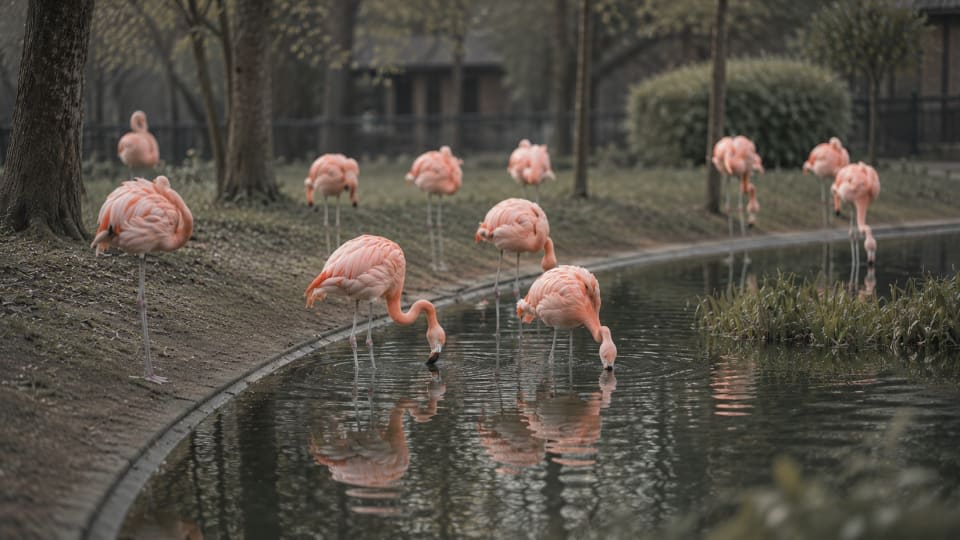
Wide walking paths wind through mature trees, flowering gardens, ponds, and spacious animal habitats, creating an atmosphere that resembles a botanical park as much as a zoological garden. Families often spend an entire day here, combining wildlife observation with relaxation, picnics, and leisurely walks.
During spring and summer the zoo bursts with greenery, while autumn transforms the grounds into a spectacular landscape of golden leaves. Even winter offers unique opportunities to observe animals perfectly adapted to colder climates.
Interesting Facts About Warsaw Zoo
Few visitors realize that the historic Villa under the Crazy Star, once home to Jan and Antonina Żabiński, still stands within the zoo grounds and can be visited as a museum dedicated to their remarkable wartime story.
Warsaw Zoo is also a member of the European Association of Zoos and Aquaria (EAZA) and participates in dozens of international breeding and conservation projects that help protect endangered wildlife around the globe.
Despite welcoming hundreds of thousands of visitors every year, it remains one of Warsaw's largest green spaces and an important refuge for both native and exotic species.
Why Visit Warsaw Zoo?
There are many places to visit in Warsaw, but few offer such a unique combination of wildlife, history, education, and recreation. A single visit allows you to discover hundreds of fascinating animal species, learn one of the city's most inspiring wartime stories, and enjoy hours of relaxation in beautifully landscaped surroundings.
Whether you are searching for the best family attractions in Warsaw, planning a day outdoors, or looking to experience a different side of the Polish capital, Warsaw Zoo is a destination that deserves a place on every itinerary. It is far more than a zoo—it is one of Warsaw's most remarkable places, where nature, history, and humanity come together in an unforgettable way.