
Before You Learn the History, You Hear Its Heartbeat
The first thing many visitors notice is not an exhibit but a sound—a slow, rhythmic heartbeat echoing through the museum. It accompanies you from one gallery to the next, quietly reminding you that the story of the Warsaw Uprising is not only about military operations and historical dates. It is about ordinary people who found themselves facing extraordinary choices.
The Warsaw Uprising Museum is unlike a traditional history museum. Instead of simply displaying artifacts behind glass, it immerses visitors in one of the most dramatic chapters of World War II. Through sound, light, original objects, personal testimonies, and multimedia installations, the museum recreates the atmosphere of a city that fought for its freedom during 63 unforgettable days in 1944.
Since opening in 2004, it has become one of the most visited museums in Poland and is widely regarded as one of Europe's finest examples of modern historical storytelling.
A City That Chose to Fight
On 1 August 1944, at exactly 5:00 p.m., known in Poland as "W Hour," thousands of soldiers of the Polish Home Army launched an uprising against the German occupation of Warsaw.
Their goal was ambitious: to liberate the city before Soviet forces entered the capital and to demonstrate that Poland remained an independent nation despite years of occupation. The odds, however, were overwhelming. The resistance fighters possessed only limited weapons and ammunition, while facing one of the strongest military forces in Europe.
For 63 days, Warsaw became the center of fierce urban combat. Civilians and soldiers fought side by side, building barricades, operating underground hospitals, delivering messages through the city's sewer system, and trying to preserve everyday life amid constant bombardment.
When the uprising ended, approximately 180,000 civilians had lost their lives, and most of Warsaw was systematically destroyed. Entire neighborhoods disappeared, leaving behind a city that had to be rebuilt almost from scratch after the war.
A Museum That Places You Inside the Story
Rather than asking visitors simply to observe history, the museum encourages them to experience it.
You walk through reconstructed wartime streets, narrow underground passages, and sections inspired by the city's famous sewer network used by resistance fighters during the uprising. Authentic military vehicles, original weapons, personal belongings, underground newspapers, photographs, and thousands of everyday objects reveal what life looked like during those difficult weeks.
One of the museum's most recognizable features is the massive steel monument that rises through the center of the building. Hidden speakers inside continuously reproduce the sound of a human heartbeat—a powerful symbol of a city that continued to live and resist despite unimaginable destruction.
Large multimedia projections, interactive displays, archival films, and recorded eyewitness testimonies transform historical facts into deeply personal experiences.
The Stories Behind the Artifacts
The museum's collection contains thousands of original objects donated by former resistance fighters, their families, and Warsaw residents.
Visitors encounter handwritten letters that never reached their recipients, children's toys recovered from ruined buildings, homemade medical equipment used in underground hospitals, resistance armbands, military uniforms, printing presses, and personal diaries filled with hopes, fears, and everyday observations.
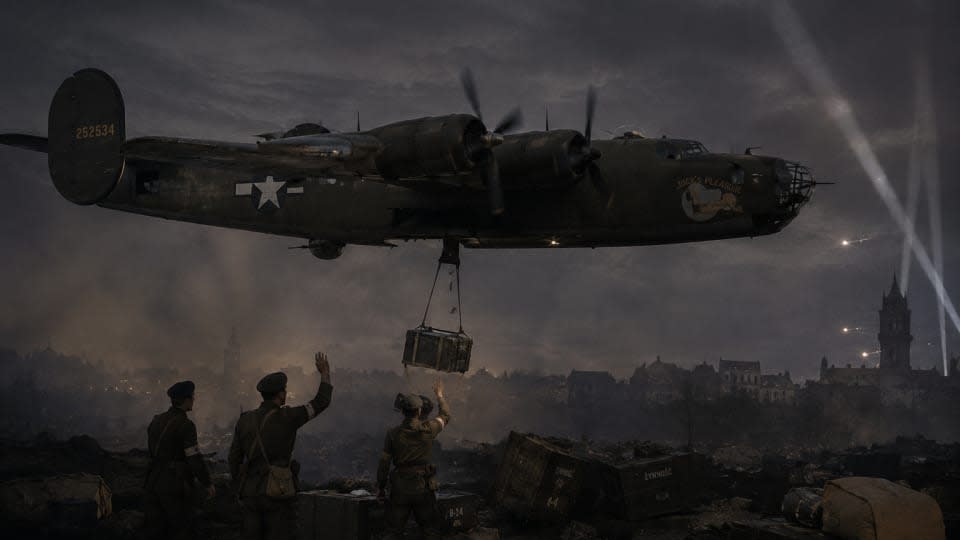
One of the museum's most impressive exhibits is a full-scale replica of the Consolidated B-24 Liberator, representing the Allied aircraft that carried out dangerous supply missions over occupied Warsaw. These flights were among the longest and most hazardous operations undertaken by Allied air crews during World War II.
Every object tells the story of a real person, making history feel immediate rather than distant.
Beyond the Museum Walls
The experience continues even after leaving the main exhibition.
Outside, visitors enter Freedom Park, where the names of thousands of fallen insurgents are engraved on the Memorial Wall, creating one of the most moving places of remembrance in Warsaw. Nearby stands the "Monter" Bell, dedicated to General Antoni Chruściel, commander of the Warsaw Uprising.
The museum itself occupies the restored buildings of a former tram power station—an industrial setting whose brick walls and historic architecture perfectly complement the story told inside.
Together, the exhibition and its surroundings create a space dedicated not only to remembering the past but also to reflecting on the value of freedom.
A Museum That Never Stops Telling New Stories
Although the permanent exhibition is the museum's centerpiece, the institution remains one of Poland's most active cultural and educational centers.
Throughout the year it organizes temporary exhibitions, documentary screenings, concerts, lectures, educational workshops, meetings with historians, and conversations with surviving participants of the uprising. It also preserves one of the world's largest oral history archives devoted to civilian and military experiences during World War II.
Every year on 1 August, precisely at 5:00 p.m., Warsaw comes to a standstill. Sirens sound across the city, traffic stops, and thousands of people pause for one silent minute in memory of those who fought in 1944. The museum remains at the heart of these commemorations.
Why Visit the Warsaw Uprising Museum?
Many museums teach history. The Warsaw Uprising Museum helps visitors understand what history feels like.
Whether you are interested in World War II, modern European history, human resilience, or simply searching for one of the most meaningful places to visit in Warsaw, this museum offers an unforgettable experience. It combines historical accuracy with innovative storytelling, creating an exhibition that is equally engaging for history enthusiasts, families, and first-time visitors to Poland.
Long after leaving the building, most people remember not only the photographs or the artifacts—but the voices, the stories, and the quiet heartbeat that reminds us that behind every historical event were thousands of ordinary people whose courage shaped the future of an entire city.